
Belgium.be sums up the status in one image: a self-employed person is, in a way, their own boss. They work on their own account, without an employment contract, starting from their first clients. The next step is to turn the project into a registered activity, with an enterprise number and the required affiliations from day one.
As a main occupation, registration with the Crossroads Bank for Enterprises (CBE) comes first. Affiliation with a social insurance fund and a health insurance fund (mutualité) follows, along with activation of the VAT number if the activity is subject to VAT. Becoming self-employed then means quarterly contributions, lighter in the first year for a primostarter.
Key points at a glance:
- To become self-employed in Belgium, the minimum age is 18, with full civil rights.
- Outside the European Economic Area and Switzerland, a professional card is in principle required.
- Registration with the CBE through a business one-stop shop (guichet d’entreprises) costs €111.50 and gives the enterprise number.
- Affiliation with a social insurance fund and a health insurance fund happens before the activity starts.
- As a main occupation, the minimum social contribution is €890.42 per quarter in 2026, with a reduced minimum for primostarters.
- A separate business account is not mandatory for a sole proprietorship, but business.belgium.be strongly advises one.
Becoming self-employed in Belgium: the conditions
Two sets of conditions apply: those that concern the person and, for some trades, those that concern the activity itself. Actiris, the Brussels public employment service, and 1890, the information service of Wallonie Entreprendre, present them in the same order.
Age, civil rights and nationality
Actiris names two main conditions: being at least 18 and holding full civil rights. 1890 adds that the person must be of age and legally capable. Belgian nationality, that of a European Economic Area state or Swiss nationality allow direct registration.
Other nationals apply, unless an exception or exemption applies, for a professional card, which then allows registration with the CBE. In Wallonia, the application costs €140 when it is submitted, then €90 per year of validity when the card is issued. In Brussels, the business one-stop shop forwards the file to Brussels Economy and Employment when the registered office is in the Region or the planned activities will mainly take place there. To obtain the card, the applicant must also be allowed to stay or settle in Belgium, Wallonia specifies.
Access to the profession
The Brussels-Capital Region dropped the basic management knowledge requirement on 15 January 2024, and Wallonia followed on 1 October 2025. According to 1890, 21 regulated activities in Wallonia still require trade-specific professional skills. Among them are the trades of restaurateur, baker and pastry chef, roofer and heating engineer. Other trades require a licence, a permit or an approval.
Self-employed status in Belgium
Belgium.be defines it simply: a self-employed person carries on a gainful professional activity without being bound to an employer by an employment contract. Someone self-employed as a main occupation makes it their main activity, unlike someone self-employed on the side, who keeps a job or a replacement income alongside. Our guide on being self-employed on the side explains this status.
This status comes with two mandatory affiliations. The social insurance fund collects social contributions and manages the rights that follow from them. The health insurance fund reimburses medical costs and pays sickness or disability benefits. According to INASTI, both are arranged at the same time, before trading begins.
How to become self-employed: the steps
The six steps below show how to become self-employed in Belgium in a logical order, close to the one presented by business.belgium.be; INASTI sets the timing of the affiliations. These steps to become self-employed start with the personal conditions and end with organising payments.
Age, civil rights, nationality or professional card. For a regulated trade, the required professional skills are in place, and some trades require a licence or an approval.
A sole proprietorship gets the activity started quickly. A company, such as an SRL, needs a notarial deed and a financial plan.
An approved business one-stop shop records the activities with their NACEBEL codes. The enterprise number is assigned on registration, which business.belgium.be lists at €111.50.
If the activity is subject to VAT, the FPS Finance activates the enterprise number as a VAT number online, before trading begins.
Both affiliations happen before the first day of activity, either directly or through a business one-stop shop (a paid service). The fund then sends the first contribution statement.
The account number appears on the invoices and documents of the business. A separate account keeps the activity apart from private spending.
Joining the social insurance and health insurance funds
According to business.belgium.be, affiliation with the social insurance fund takes three steps. First comes the choice of an approved fund, then the affiliation form, online or on paper. The fund finally sends the confirmation and the first contribution statement. It then manages the self-employed person’s social security, and the health insurance fund handles reimbursement of care and benefits.
VAT: liability and the exemption scheme
A sole proprietorship is not automatically subject to VAT. The business.belgium.be site explains that liability depends on the nature of the activity, namely the supply of goods and services covered by the VAT Code.
Below €25,000 of annual turnover excluding VAT, the FPS Finance makes the exemption scheme for small businesses (franchise regime) available. There are then no periodic returns and no VAT charged to clients, and VAT on purchases is not deductible. A few sectors fall outside the scheme, and in the start year the threshold is calculated pro rata to the period of activity. On the invoicing side, structured e-invoices over the Peppol network have been required between VAT-registered businesses since 1 January 2026, and the FPS Finance in principle applies this to businesses under the exemption scheme as well.
Sole proprietorship or company
The business.belgium.be site recommends comparing legal forms before registering, since each has its advantages and drawbacks. The sole proprietorship is described there as a simple and quick way to start: registration goes directly through a business one-stop shop, without a notary and without minimum capital. A company requires more steps, set out in our article on setting up an SRL in Belgium.
Social contributions as a main occupation
The amount follows professional income, with a minimum and a ceiling. Here are the quarterly amounts INASTI publishes for 2026.
| Situation (2026) | Quarterly contribution |
|---|---|
| Start of activity, until the end of the third full calendar year | €890.42 (provisional) |
| First quarter of a primostarter | €771.90 (provisional) |
| Rates on professional income | 20.50% up to €75,024.54, then 14.16% up to €110,562.42 |
| Minimum contribution | €890.42 |
| Maximum contribution | €5,103.05 |
At the start, income is not yet known: contributions are provisional at first, then calculated definitively on the year’s real income, once reported by the tax administration. According to INASTI, the €890.42 minimum corresponds to an income of €17,374.08, and funds add their management fees on top.

Primostarter: a reduced contribution at the start
A primostarter is someone starting out as self-employed as a main occupation who has not held that status in the previous 20 quarters. INASTI specifies that someone self-employed on the side or a self-employed student moving to a main occupation also qualifies. Resuming after a period of incapacity for work or disability can also open this status, under conditions.
For 2026, the INASTI scale sets a primostarter’s provisional contribution for the first quarter at €771.90, which is the general minimum less a €118.52 reduction. During the first four quarters, a reduced contribution can be requested on the basis of objective evidence: €459.82 per quarter if estimated professional income does not exceed €8,972.07. The primostarter’s minimum final contribution is €341.30 for the first quarter and €459.82 for the next three quarters.
Rights built up through contributions
In return for these contributions, the self-employed person builds up social rights, and the fund manages this social security day to day. Belgium.be names family benefits, health and disability insurance, maternity insurance, pension and the bridging right (droit passerelle). In the event of a forced cessation of the activity, it provides a replacement income and keeps certain social rights.
Taxes: personal income tax
In a sole proprietorship, profit is taxed under personal income tax. Wikifin, the public financial education website, specifies that tax is calculated on net professional income, meaning professional income less professional expenses, social contributions and any losses. The rate is progressive, from 25% to 50% according to Wikifin. A company falls under corporate income tax instead.
Advance payments are made each quarter on the year’s estimated profits. Made on time, they give entitlement to a bonus, meaning a tax reduction. For 2026 income, the deadlines fall on 10 April, 10 July, 12 October and 21 December 2026. The bonus decreases over the year: 3% for the first payment, then 2.50%, 2% and 1.50%. The FPS Finance advises paying, in each of the first four periods, 25% of the tax that would remain due at the end of the year.
Starting out as self-employed with regional aid
The Regions support people who start out as self-employed as a main occupation, subject to conditions on residence and situation. This aid is prepared before the first formalities.
In Brussels, Actiris offers a bonus that decreases over time, of up to €4,000 during the first six months of activity. It is aimed in particular at people living in the Region and registered as unemployed job seekers when the support starts. They must not have been self-employed as a main occupation in the two years before the application. Actiris asks applicants not to take any step to become self-employed before the opinion of an approved support organisation.
In Wallonia, the Airbag scheme, run by Le Forem, pays an income top-up at the start: at most €12,500, in four instalments over two years. The Region specifies that it can be combined with other aid, such as business vouchers.
In short: as a main occupation, the social cost is counted quarter by quarter, and primostarter status lightens the first year. Regional aid is requested before the formalities begin.
A business account from the first client
Optional for a sole proprietorship, a separate account is still strongly advised by business.belgium.be. Whether a business account is mandatory in Belgium depends on the legal form, as our article on whether a business account is mandatory in Belgium explains. Sole proprietorships registered with the CBE can apply for an online business account with Vivid; each application is reviewed:
The Standard plan is limited to EUR accounts, and some services on it are charged. ATM withdrawals are free up to €200, for withdrawals of at least €50. Above €200, or for a smaller withdrawal, 3% applies, with a minimum of €1. Topping up the account by card is free up to €200, then charged from 1% (minimum €0.49). Each physical card beyond the first costs €9.90 with standard delivery, €24.90 express. All fees are on the plans for the self-employed page.
Vivid in brief: for sole proprietorships registered with the CBE, Vivid Money S.A., an electronic money institution authorised in Luxembourg, offers an online business account from €0 a month with Standard.
Start the business with a separate account
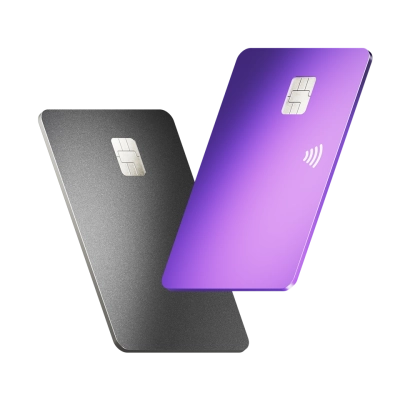
For a sole proprietorship: client invoicing, a Visa debit card and the Standard plan at €0 a month. Online application in about 10 minutes.
Frequently asked questions
How to become self-employed in Belgium: what are the conditions?
Being at least 18 and holding full civil rights. Outside the European Economic Area and Switzerland, a professional card is in principle required. Some trades also require specific professional skills.
What does CBE registration cost for a self-employed person?
Registration through an approved business one-stop shop costs €111.50, according to business.belgium.be. The FPS Finance then activates the VAT number online free of charge, if the activity is subject to VAT.
What is a primostarter?
Someone who starts out as self-employed as a main occupation without having held that status in the previous 20 quarters. They benefit from a reduced minimum contribution during their first four quarters.
When is affiliation with a social insurance fund due?
Before the activity starts. Affiliation with a health insurance fund happens at the same time, according to INASTI.
Is VAT mandatory for a self-employed person?
Only if the activity is subject to VAT. With annual turnover of no more than €25,000 excluding VAT, the small-business exemption scheme can be chosen, outside excluded sectors.
Is a business account needed to become self-employed?
Not for a sole proprietorship. business.belgium.be strongly advises a separate account but does not make it mandatory. A company, by contrast, opens an account in its own name.
Is it better to start as a main occupation or on the side?
Self-employment on the side requires a main activity alongside, usually a job of at least half-time. As a main occupation, the minimum contribution applies, reduced for a primostarter.
This article is for general information only and does not constitute legal, tax or social security advice. The rules and amounts cited are those published by INASTI, the FPS Finance, business.belgium.be, belgium.be, Actiris, Wallonia, 1890 (Wallonie Entreprendre), Brussels Economy and Employment and Wikifin, and may change. Payment services are provided by Vivid Money S.A., an electronic money institution authorised and regulated by the Commission de Surveillance du Secteur Financier (CSSF) in Luxembourg. The cashback programme is offered by Vivid Money GmbH.