In short:
- What it is: a business account is a financial tool that separates business finances from personal ones.
- Is it required? Limited companies (SL) and public limited companies (SA) must open one from day one. Freelancers are not legally obliged, but it helps them meet tax requirements.
- What it includes: services such as POS terminals, e-invoicing, multi-user access, and commercial credit.
- Initial deposit: ranges from €0 on many freelancer accounts up to €3,000 on premium accounts.
- Opening time: from a few hours with digital banks to up to 7 business days with traditional ones.
A business account is a specialised financial product that lets businesses manage their finances professionally and separately from personal ones. In Spain, holding this type of account is not only a legal requirement for many legal structures, it is also a key tool for improving the financial management of any commercial activity. Choosing a professional name for the account also matters, since it strengthens the business image and makes it easier to identify in commercial transactions.
More than 85% of Spanish SMEs use business accounts to manage their economic activity, because they offer specific services that are not available with personal accounts. A business account provides features and services built for businesses, SMEs, and shops, making it easier to manage finances and access specialised financial services. From commercial credit lines to point-of-sale systems, these accounts are designed to cover the operational needs of freelancers, startups, small businesses, and large corporations.
In this article, we will look in detail at what defines a business account, the different types available in the Spanish market, their tangible advantages, and the full process for opening one.
Contents
What is a business account?
A business account is a financial product designed specifically to manage the finances of businesses, freelancers, and companies. Its main purpose is to fully separate personal assets from business assets, creating a legal and accounting barrier between the two types of funds. It also includes debit cards for the business and can give access to cheque books and overdrafts, which makes day-to-day financial operations easier.
This separation of assets is not just a recommendation, it is a legal obligation in Spain for certain legal structures. Limited companies and public limited companies must open a business account from the moment they are formed, depositing the minimum share capital required. Freelancers, although they do not have this strict obligation, find these accounts an essential tool for meeting their tax obligations efficiently. Keeping personal and business finances separate is key to simplifying management, accounting, and tax compliance, as well as projecting a professional image.
The business account acts as the financial operations centre of the business, letting you manage customer payments, supplier payments, employee payroll, and all transactions related to your economic activity. This centralisation makes accounting, tax filing, and cash flow control much easier.
The key difference from personal accounts is that the latter are designed to manage the finances of an individual in their daily life, while business accounts include specialised services such as POS terminals, e-invoicing management, access to commercial financing, and multi-user management tools. Personal accounts are ideal for the daily needs of an individual. The functions of each type of account are adapted to the specific needs of its users, with a focus on fund management and the benefits offered by both personal and business accounts.
In addition, a business account is usually linked to a specific tax identification number for the business and registered with the commercial registry, which ensures the legal and tax traceability of every operation carried out. This is especially important for issuing invoices and tracking money movements, avoiding any mixing with personal funds and making internal and external audits easier.
Main features of a business account
Business accounts differ from personal ones thanks to a series of specific features that make them essential tools for managing any business professionally.
Separation of assets
The most important feature of a business account is its ability to keep business finances completely independent from personal ones. This separation not only makes cash flow control easier, it is also key to meeting the legal and tax requirements set by the Spanish tax authority.
Multiple authorised users
Business accounts let you grant different access and permission levels to employees and partners. You can set up different authorisation levels: from view-only to full operation, including specific permissions for payments, transfers, or payroll management. This functionality improves delegation and efficiency in treasury management.
Specialised services
These accounts include access to services designed specifically for businesses: physical and virtual POS terminals, e-invoicing, automated payroll management, bulk payments to suppliers, and direct debits. They also offer compatibility with accounting software and business ERP systems.
Specific financial products
Businesses get access to commercial credit lines, business loans, factoring, confirming, and financing products adapted to their risk profile and needs. Business accounts can also offer customised credit and financing solutions for the growth and sustainability of the business. Among these products, the credit line stands out as a flexible option for the financial management of the company. These products are generally not available for personal accounts and offer more favourable conditions for commercial operations.
Differentiated fees
The cost structure is adapted to the volume of business operations. Although fees tend to be higher than personal accounts, many institutions offer discounts based on business volume or specific promotions for entrepreneurs and startups. The fee can also be a fixed annual cost, or applied quarterly, regardless of account activity.
Higher operating limits
Business accounts have a greater capacity for transfers and cash movements, adapting to the liquidity needs of businesses. Daily limits can be up to ten times higher than those of personal accounts.
Accounting traceability
Detailed records make business accounting and tax audits easier. Statements include advanced categorisation, commercial references, and the information needed for filing taxes such as quarterly VAT or Corporate Income Tax.
Issuing and using cheques
Although the use of cheques has declined, business accounts usually offer the option to issue cheques as a means of payment, making operations easier with suppliers or customers who prefer this method. This functionality is less common in personal accounts and is an advantage for certain sectors or commercial activities.
Tailored management
Business accounts are designed to fit the specific needs of each type of business, offering tailored solutions in both services and conditions. This ranges from setting up balance and transaction limits to integration with the business’s own financial management systems.
Types of business account by business type
The Spanish financial market offers a wide range of options adapted to different types of businesses and specific needs.
Accounts for freelancers
Accounts designed for freelancers combine the flexibility independent professionals need with basic business services. These accounts usually have reduced fees and a simplified online opening process.
Notable examples include the Vivid Business account, which lets you operate in multiple currencies. These accounts make basic operations easier for any freelancer.
Most institutions offer specific promotions for new freelancers, with fee discount periods and free services during the first months of activity. You can also check Vivid’s current offers for business accounts.
Ready to go self-employed? Our step-by-step guide makes it easy from the very first moment.
Accounts for small and medium-sized businesses
SMEs need more advanced services, including payroll management, physical and virtual POS, corporate online access, and treasury tools. These accounts are designed for businesses with annual turnover between €50,000 and €2 million.
Specific financing services include revolving credit lines, invoice advances, and commercial discounting. They are especially useful for retail, professional services, and small manufacturers that need to manage multiple suppliers and employees. Manufacturing companies should consider a current business account with access to credit lines to cover their operational needs.
International accounts for businesses
For businesses with global operations, there are accounts specialised in multi-currency operations that let you manage euros, dollars, and other major currencies with preferential exchange rates.
Vivid stands out by letting you operate in a wide range of currencies and different transfers, while other traditional competitors offer international transfers with higher fees, whether for currency conversion or even for sending money abroad. SEPA accounts make operations within the European economic area easier with minimal costs.
Specialised accounts for startups
Startups have access to preferential conditions that include free maintenance during the first months and minimum share capital requirements. Many of these accounts allow a 100% online opening with advanced mobile apps. Technology companies and startups benefit from current business accounts with additional investment and credit services, adapted to their growth needs.
Vivid lets you create a business account online in a couple of hours, including all the legal steps.
These solutions are designed for technology companies and digital business models that need agility and flexibility.
Comparison: personal account vs business account
A detailed comparison between the two types of accounts helps you understand when each option is the right fit:
| Aspect | Personal account | Business account |
|---|---|---|
| Purpose | Managing personal and family finances | Administering commercial and business activity |
| Authorised users | Generally one holder, occasionally authorised users | Multiple users with differentiated permissions |
| Financial products | Personal loans, mortgages, consumer cards | Commercial credit lines, factoring, confirming |
| Fees | Simplified structure, discounts for direct debits | Fees for services, discounts by volume |
| Operating limits | Limited to personal consumption needs | Adapted to high commercial volumes |
| Tax obligations | Annual personal income tax return | Quarterly VAT, Corporate Income Tax |
| Professional image | Not relevant for commercial activity | Conveys seriousness and professionalism |
This table clearly shows that personal accounts are designed for individual consumption, while business accounts are built for managing businesses professionally. The choice depends on the type of activity, the volume of operations, and the legal structure of the business.
Tangible benefits of a business account
Opening a business account brings measurable, concrete advantages that go beyond simple legal compliance. If you want to enjoy these benefits and improve the financial management of your business, becoming a customer is straightforward. The process is simple and fast, with personalised support to answer any questions and make the most of the exclusive advantages for businesses.
Tax and accounting benefits
Separating funds greatly simplifies business accounting and reduces errors when filing taxes. Businesses can automatically categorise income and expenses, making quarterly VAT returns easier.
Meeting Corporate Income Tax obligations is also helped by the full traceability these accounts offer. In the event of a tax inspection, having clear and separate records significantly reduces risks and makes it easier to justify operations.
Operational benefits
Your professional image with clients and suppliers improves considerably when payments and collections are made from a business account. Clients perceive greater seriousness and trust in businesses that manage their finances professionally.
Access to business financing can be up to 6 times higher than what is available with personal accounts. Commercial credit lines offer flexibility to manage treasury during periods of high demand or investment.
Efficient collection management is improved through automatic direct debits, POS terminals, and integrated e-invoicing. Corporate cards with configurable limits let you control employee spending precisely.
Financial benefits
Many institutions offer specific promotions for businesses that, although they reward you, are subject to fees or come with conditions that require you to take out additional products.
On the other hand, there are remunerated business accounts: Vivid Business offers up to 4% annual interest during the first two months, and after that depending on rates and the plan you choose, with no additional conditions. Preferential fees on international transfers can generate significant savings for businesses with global activity.
Step-by-step process to open a business account in Spain
Opening a business account in Spain follows a structured process that has become considerably simpler. Some banks also show an indicator of the risk level associated with the business account, using a scale from 1 to 6, where 1 represents the lowest risk and 6 the highest, which helps users assess the security of the product.
How to open a business account in Spain, step by step
Freelancers need a DNI and tax registration via form 036/037. Companies need the deed of incorporation, the CIF, and notarised powers for legal representatives.
Compare maintenance fees, included services, and current promotions. Assess your monthly transaction volume and whether you need international operations.
You can open the account in person, fully online, or through a hybrid model. Processing time ranges from a few hours with digital banks to up to 7 business days with traditional ones.
Set up the online account, download the app, and request your cards. You can then add authorised users with different permission levels and enable services such as POS terminals or SEPA transfers.
Step 1: Required documents
Freelancers need a DNI, tax registration with the Spanish tax authority via form 036/037, and possibly the freelancer registration certificate with Social Security. The process is relatively simple and can mostly be completed online.
For companies, the documentation includes the notarial deed of incorporation, the definitive CIF, notarised powers for legal representatives, and documentation of directors and partners.
Additional documentation may include the commercial premises lease, business insurance policies, and, in some cases, a basic business plan that justifies the planned activity, plus, depending on the activity, contracts to justify the operations.
Step 2: Choosing the bank and account type
Comparing offers should take into account maintenance fees, included services, and current promotions. It is key to assess your specific needs: monthly transaction volume, required services, and whether you need an international presence.
The choice between digital and traditional institutions depends on the business profile. Digital institutions offer more agility and lower costs.
Step 3: Application and opening
The available options include opening in person at a branch, fully online, or a mixed model. Processing time varies from hours for digital banks to up to 7 business days for in-person processes at traditional institutions.
The initial deposit required ranges from €0 on many freelancer accounts up to €3,000 on premium accounts for large businesses. Some institutions request a security deposit that is returned after a set period.
Step 4: Activation and setup
Once the account is approved, you set up the online account and download the mobile app. You can request business debit and credit cards at the same time through the app, or physically if it is a traditional institution.
Setting up authorised users lets you establish different permission levels based on each employee’s responsibilities. Additional services such as POS, direct debits, and SEPA transfers are activated according to the operational needs of the business.
Additional services and financial products
Business accounts offer a complete ecosystem of financial services that go beyond basic fund management. They provide the financial structure needed to manage company resources and make informed decisions about their performance, ensuring efficient and strategic administration.
Business payment methods
Physical and virtual POS terminals let you accept card payments with fees starting from 0.6% per transaction. Online payment gateways integrate easily with e-commerce platforms, making digital sales easier.
It is important to check settlement times, since many POS services do not offer the option to access the funds collected instantly. On this point, Vivid offers this option on both its online and physical POS terminals.
Financing services
Business credit lines range from €6,000 up to €600,000 depending on the credit profile and available guarantees. Invoice advances provide immediate liquidity, financing up to 80% of the amount invoiced to clients with a good credit rating.
Renting and leasing products make it easier to acquire vehicles, machinery, and technology equipment without compromising business liquidity.
Discover Vivid’s business loans and find the financing solution that best fits your business.
The business account that does more
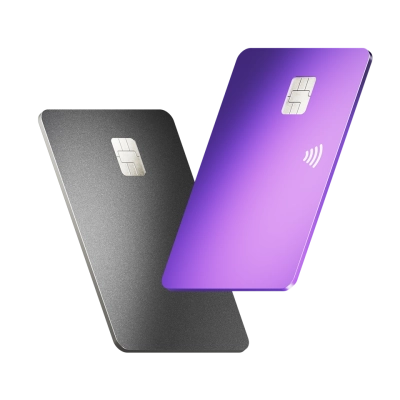
With the Vivid business account you handle payments, bookkeeping and investing in one place. Opening is fully online, with a German IBAN and sub-accounts that keep your money organised.
Frequently asked questions about business accounts
What is a business account and how does it differ from a personal one?
It is a financial tool built for companies, sole proprietors, and legal entities. Unlike a personal account, it separates business finances from personal ones and supports services such as POS terminals, e-invoicing, and multi-user access.
Is a business account mandatory?
It depends on the legal structure. Limited companies (SL) and public limited companies (SA) must open one from day one to deposit the initial share capital. Freelancers are not legally obliged, though it significantly helps them manage taxes.
What documents do I need to open one?
If you are a freelancer: a DNI and tax registration via form 036/037. For a company: the deed of incorporation, the definitive CIF, and notarised powers for the legal representatives.
How much do I need to deposit to open one?
The initial deposit varies widely. It ranges from €0 on many freelancer accounts up to €3,000 on premium accounts for larger companies. Some banks ask for a security deposit that is returned later.
How long does it take to open a business account?
Processing time ranges from a few hours with digital banks to up to 7 business days for in-person processes at traditional banks.
What features should I look for in a business account?
Useful features include physical and online POS terminals, e-invoicing, payroll management, authorised users with differentiated permissions, and access to commercial credit lines.
Information current as of June 2026. This guide is for informational purposes only and does not constitute legal or tax advice. Rules and amounts may change. Check with a professional or the official source before making decisions.