The key points at a glance:
- Why an N26 alternative? N26 works as a solo and personal account. For business, though, you hit limits fast: The free N26 Business exists only for sole traders and freelancers; for a GmbH or UG, N26 runs a separate small-business account with tight limits (one director, up to 9 employees, up to €2M revenue). On top of that, the cashback stays thin at 0.1% on the Standard plan, and N26 does not bundle investing, sub-accounts and several currencies into one app.
- The best alternatives in 2026: Vivid, Revolut, bunq, Finom, Fyrst and Qonto. From a German IBAN to investing, depending on what your business needs right now.
- Bottom line up front: if you want everything in one account, Vivid fits. One account that is open to a GmbH and UG too and brings together cashback with no monthly limit on all purchases, investing and sub-accounts with their own IBAN in a single app.
You are on N26 and slowly noticing that your business has outgrown the account? You are not alone. N26 is one of the best-known neobanks, holds a German banking licence and has an app, and for getting started with digital banking it is an option. But as soon as self-employment turns into a bigger venture, the same questions come up: what if you form a GmbH or UG? How flexible are you with several currencies and accounting? And why is the cashback so thin? Sooner or later, that is when it pays to look at an N26 alternative. This comparison is for anyone looking for a business account. Whether you are founding a company, freelancing or running a small team does not matter at first.
To be clear from the start what this is about: business accounts, not personal accounts. You get a level-headed overview of the serious N26 alternatives in 2026, and at the end a clear recommendation on which account suits which need. No marketing speak. Numbers you can actually compare.
What does N26 Business offer?
N26's offering
Coming from a classic current account, N26 feels familiar at once: a German IBAN, an app, everything geared to the smartphone. For €0 a month you start on Standard, above it wait Smart, You and Metal with more cards and extras. On Standard, 0.1% cashback trickles in, along with real-time transfers, a Mastercard Debit and Spaces you split money into. Apple Pay and Google Pay? Both there. As a licensed direct bank, N26 protects your balance under the statutory deposit guarantee up to €100,000. For anyone running solo who likes it simple and German, that is a rock-solid base. You can now invest from the business account too: stocks and ETFs from €1. Funds, bonds or several currencies at scale, though, are not part of it.
N26's limits for business
As neat as N26 feels day to day, plenty gets left behind for a growing business. The most important point first. The free N26 Business is open only to sole traders and freelancers. For a GmbH or UG there is a separate small-business account, but only with one director, up to 9 employees and up to €2M in revenue, and it requires a personal N26 account. Anyone who outgrows those limits has to switch providers. Investing in stocks and ETFs now works from the business account too, but funds and bonds do not. On cashback, 0.1% on the Standard plan barely moves the needle. N26 covers several currencies only within limits, and a native DATEV connection is not part of the core. These are exactly the points where a good alternative to N26 Business steps in.
In short: N26 scores as a German solo account with a banking licence and a clean app. For business it stays tight: a GmbH and UG account only within strict limits, no funds or bonds from the account, and 0.1% cashback that hardly pays off. That is where the alternatives hook in.
N26 alternatives at a glance
The most important providers in a direct comparison, with starting prices, cashback, investing and accounting at a glance (as of 2026, please check with the provider).
| Provider | Monthly price | Cashback | Investing | Accounts & IBANs | Currencies | Bookkeeping | Best for |
|---|---|---|---|---|---|---|---|
| Vivid | €0 (Free Start), all legal forms incl. GmbH and UG | 0.1% to 1% by plan, no monthly cap (all purchases), up to 10% in categories | stocks, ETFs, iBonds, money market funds, crypto | unlimited, each with its own IBAN | 22 currencies | DATEV interface + invoicing tools | Freelancers to GmbH |
| Revolut Business | from €10 (Basic), no free plan | no standard cashback | money market fund (Flexible Cash Funds) | sub-accounts by plan | 25+ currencies | Xero and QuickBooks, no DATEV | Internationally active SMEs |
| bunq Business | €0 (Free), sole traders only · from €7.99 (Core) for companies | no cashback | no investing from the business account | up to 25, each with its own IBAN | 20+ currencies | DATEV export via data centre | SMEs & limited companies |
| Finom | €0 (Solo), freelancers and sole traders only · from €9 (Basic) for GmbH/UG | no cashback on Solo, from 1% on Basic (monthly cap) | no investing | unlimited | 17+ currencies | DATEV interface + invoicing tools | Freelancers & sole traders |
| Fyrst | €0 (BASE), natural persons only · €6 for GmbH/UG from month 7 | no cashback | brokerage via partner (maxblue) | no sub-accounts on BASE, up to 5 from Premium | EUR only | DATEV export via data centre | SMEs that need branches |
| N26 Business | €0 (Business Standard), solo self-employed only; GmbH/UG need the separate company account | 0.1% (Standard), 0.5% (Metal) | stocks & ETFs from €1 | no sub-accounts on the free plan, up to 10 Spaces with their own IBAN from Smart | EUR only | no DATEV integration | Solo self-employed |
| Qonto | €0 (Starter), only 5 transactions a month · from €9 (Basic), excl. VAT | 0.4–0.8% (upgrade card only, capped) | money market fund only | 1 sub-account from Premium (self-employed) | EUR only | DATEV interface | SMEs & limited companies |
What matters in an N26 alternative
Before you switch, it is worth looking at the points that really affect you day to day: from the legal form to cashback to the question of how safely your money sits.
Legal form: who is allowed to use the account?
This is where N26 most often drops out for business. The free N26 Business is open only to sole traders and freelancers. For a GmbH or UG there is a separate small-business account, but only with one director, up to 9 employees and up to €2M in revenue. Anyone planning a larger company needs an account from the start that makes the jump, instead of moving every payment after incorporation. Vivid is there for a GmbH and UG too. bunq and Qonto as well. So check first which legal form you run today and which becomes realistic in two years.
German IBAN or one from another EU country?
For invoices, direct debits and salaries you need an IBAN your partners accept without asking questions. Vivid, N26, Fyrst and Qonto give you a German IBAN. Some providers work with an IBAN from another EU country instead. Within SEPA the two are equal, and a provider is not even allowed to refuse an IBAN from another EU country, that is the law. A German IBAN is still the one your partners know from a house bank, and with some of them it saves you the odd follow-up question.
Cashback compared
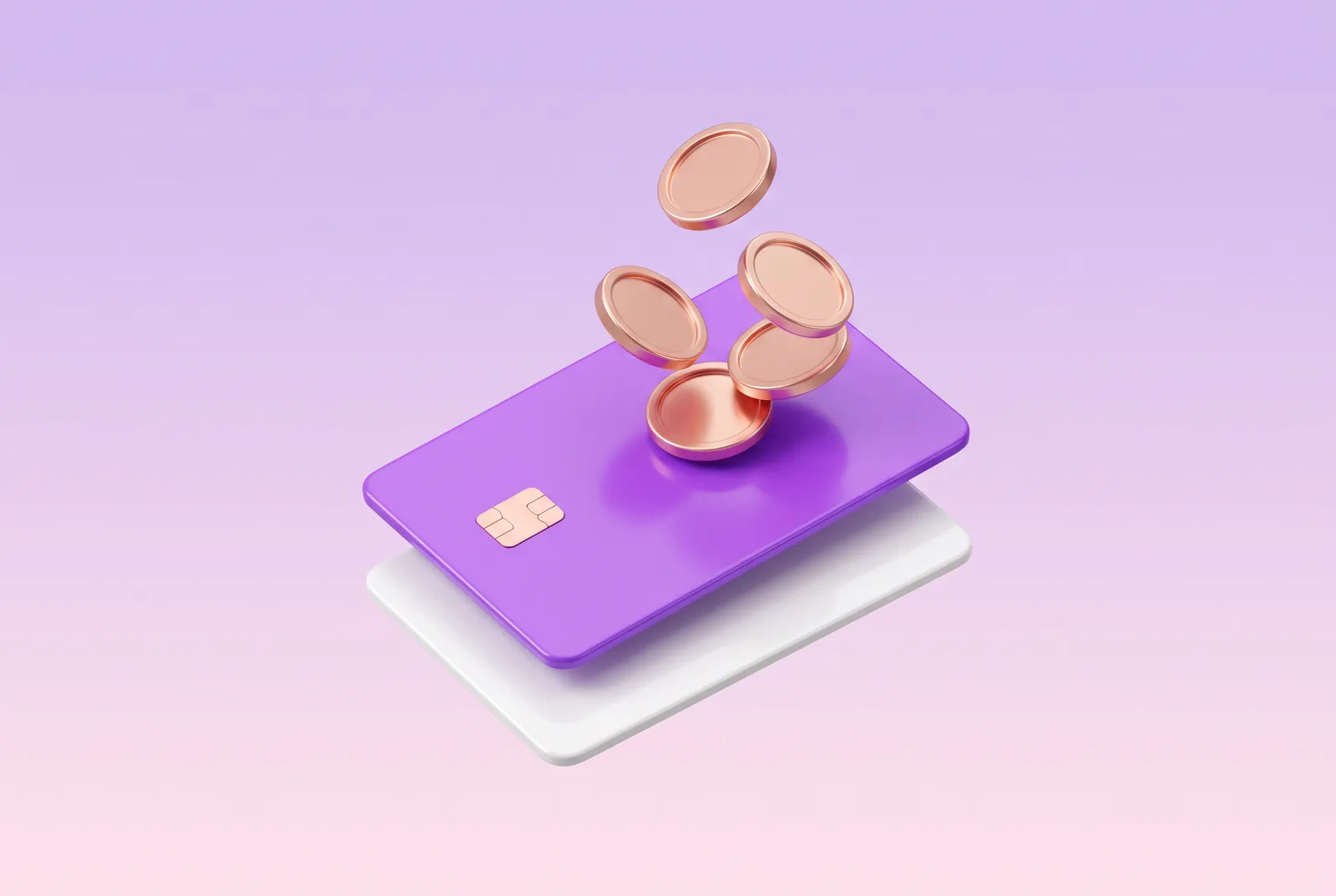
In everyday business, cashback is nothing other than money back in your pocket. N26 pays 0.1% on the Standard plan, which barely registers. Finom adds cashback from the Basic plan, while Revolut and Fyrst pay none in the standard plan. With Vivid you get, depending on the plan, up to 1% cashback with no monthly limit on all purchases, and up to 10% in selected categories. Especially on running expenses that makes a difference over a year that shows up in your balance.
International payments and exchange rate
If you often pay in a foreign currency, in the end the rate decides your costs, not the small print. N26 covers several currencies only within limits. The specialists here are Revolut and Wise: Revolut calculates at the interbank rate midweek, yet charges 0.5 to 1% on top at weekends. Two things are worth a look, the foreign-currency fee and the question of whether a real multi-currency account sits behind it. With Vivid you see the rate before every transfer, pay in several currencies and carry no hidden weekend surcharge along.
Safety and regulation
Where does your money actually go once it lands in the account? Reassuringly, everyone here is regulated, and not one is a wild startup without oversight. N26 and bunq are banks, Fyrst belongs to Deutsche Bank, Revolut holds a Lithuanian banking licence, Qonto is a payment institution, Vivid an e-money institution. As a bank, N26 falls under the statutory deposit guarantee up to €100,000. At Vivid your money sits separately from company assets, which is called safeguarding. The €100,000 deposit guarantee of a traditional bank does not apply to e-money; instead safeguarding shields your balance. Day to day, a simpler question matters more anyway: is support reachable, and is your money there on time?
Accounting and DATEV integration
If your tax advisor works with DATEV, a direct interface saves you both hours at month-end. N26 leans more on connecting to accounting tools than on a native DATEV interface. Vivid has the DATEV connection, Fyrst provides a DATEV export, and Qonto is DATEV-connected too. Almost every provider allows at least a CSV file your advisor then imports on their side. A second look pays off: do receipts land straight in the account, and do you write invoices from the same app? With Vivid, invoicing tools and invoice management belong to it by default. Three programs in parallel are not needed.
Plans and fees at a glance
The price per month is only half the truth. Also look at how many SEPA transfers are included and what extra cards cost. Are there fees when you want to withdraw and deposit cash, or for foreign currency and an express payment? An account for €0 can end up pricier than a paid one once many single items pile up. Vivid starts with the Free Start plan at €0 a month, with no monthly account-maintenance fee at all. Anyone who needs more cards or extras picks a higher plan.
Vivid as an N26 alternative
N26 scores as a German solo account, others shine at accounting or at international payments. What hardly any provider brings together in one account is the combination of cashback, investing and sub-accounts, open to companies as well. This is exactly where Vivid comes in.
Vivid plans and pricing
At Vivid you start on the Free Start plan at €0 a month, with no fee for the account and no minimum incoming amount. Need more cards or extras? You grow into a higher plan. You reach your contact right in the app. And you open the business account fully online via video or selfie ID, sparing yourself the trip to a branch.
What sets Vivid apart for business
Vivid bundles exactly the points that together make the difference:
Everything sits in one app. Account, cards, investing and cashback, instead of three tools side by side. The cashback with no monthly limit on all purchases turns into real money over a year of running expenses. Reserves no longer sit dead, they work through investing. And because the account is open to a GmbH and UG as well, you spare yourself the provider switch at your next growth step.
Who is Vivid for?
Vivid fits freelancers and the self-employed, small companies as well as a GmbH and UG. Teams that work internationally and want to give up neither cashback nor investing are in the right place too. Because the plans scale upward from the €0 Free Start plan, the account grows with you, from the first invoice to a formed company.
Opening an account with Vivid
Opening an account runs online in a few steps. You enter details about your company, verify via video or selfie ID and activate the account. Switching from another provider is uncomplicated: you move existing payments over bit by bit. As a founder you are ready to go just as quickly as when switching. You find all the details on the page for the Vivid business account.
Bottom line: Vivid combines account, cashback, investing and several currencies in one app, open to a GmbH and UG too, a strong choice as an N26 alternative for business.
More N26 alternatives
Revolut Business
Revolut is the choice when money moves across borders: 25+ currencies at the interbank rate, a company card plus virtual and physical cards, plus tools for spend management. Plans start at Basic for around €10, more features arrive from Grow at €35 a month. Revolut is regulated under a Lithuanian banking licence with a branch in Germany supervised by BaFin. The catch: at weekends a surcharge of 0.5 to 1% lands on the rate, the standard plan has no cashback, and accounting runs through Xero or QuickBooks rather than DATEV.
bunq Business
If you like to run your money across many pots, you feel at home at bunq fast: the Dutch bank leans on sub-accounts, a an app and several currencies. It starts on the Free plan at €0 for sole traders, the paid tiers from €7.99 a month. Anyone juggling many savings goals in parallel stays flexible here. The catch: bunq lives off savings interest rather than a cashback model like Vivid, and you cannot buy securities from the business account. Suited as a home for savings goals, less so as an all-in-one.
Finom
If you write a lot of invoices, Finom focuses on invoicing: quote, invoice and incoming payment sit in one tool that shrinks the paperwork noticeably. It is built for freelancers and small companies, cashback included. In return, the rest gets tighter: the ecosystem is smaller than at the big players, securities investing is missing, and with several currencies you soon hit a wall. Anyone who writes a lot and juggles little is exactly right here.
Fyrst
If you still want to deposit cash over the counter, Fyrst is an option: the business-account brand of Deutsche Bank plays the very card the neobanks lack, real branches. The BASE plan starts at €0, COMPLETE sits at €10 a month, plus a German IBAN and a DATEV export via the data centre. Anyone who wants an established bank brand behind them is well placed. Cashback you will hunt for in vain, and investing exists only through the connected maxblue depot from Deutsche Bank, not natively in the account.
Qonto
If everything for you revolves around accounting, you land at Qonto quickly: the payment institution delivers a German IBAN on all plans, DATEV and Lexoffice integration, the One Card Mastercard and fine-grained team management with roles. Unlike the free N26 Business, Qonto also takes a GmbH or UG without tight size limits. For accounting fans Qonto covers that. Only: there is a free Starter plan, but the Basic plan sits at €9 a month, and the account holds euros alone. Cashback comes only through the cards at 0.4 to 0.8%, and instead of stocks and ETFs Qonto offers only a money-market fund.
Choosing the right N26 alternative
Which alternative fits simply depends on your needs. Do you want cashback and investing in one account that is open to a GmbH and UG too? The path leads to Vivid. If you pay a lot abroad, Revolut and Wise are strong, and anyone who wants to deposit cash or an established bank brand is right with Fyrst. Anyone running many pots in parallel finds a flexible model at bunq, and for invoicing fans Finom is handy. If accounting is in the foreground, Qonto is worth a look. A rule of thumb helps with the maths: do not count only the base price, but add cards, cash and international payments on top. Only this sum shows what an account really costs you over a year.
Conclusion: which N26 alternative fits?
N26 stays an option for solo self-employed people who like it German and simple. But anyone looking for cashback, investing and sub-accounts in one account for business, and that as a GmbH or UG too, finds in Vivid the fitting all-in-one alternative. Revolut, bunq, Finom, Fyrst and Qonto each cover individual needs depending on the focus. In the end your profile decides: solo self-employed, growing teams and companies set different priorities. The table and the criteria above help you make the right choice quickly.
Ready for your business account?
With a Vivid business account you get cashback with no monthly limit on all purchases, investing and sub-accounts with their own IBAN in one app, for a GmbH and UG too.
Frequently asked questions (FAQ)
What is the best N26 alternative?
It depends on what you need. For a business account with cashback, investing and sub-accounts in one app that is open to a GmbH and UG too, Vivid is a strong choice. For many payments abroad, Revolut is strong; if your main concern is accounting, Qonto fits.
Is there an N26 alternative for a GmbH or UG?
Yes. The free N26 Business exists only for sole traders and freelancers; for a GmbH or UG, N26 has only a separate, tightly limited small-business account (one director, up to 9 employees, up to €2M revenue). Without such limits you get a GmbH- and UG-ready alternative with Vivid, bunq or Qonto. With Vivid you get account, cashback and investing in one.
Is there an N26 alternative with cashback?
Yes. Vivid pays cashback with no monthly limit on all purchases straight from the business account. N26 itself adds only 0.1% on its Standard plan, and Finom offers cashback from the Basic plan.
Which N26 alternative has a German IBAN?
You get a German IBAN with Vivid, Fyrst and Qonto. Some providers use an IBAN from another EU country, which is valid across the whole SEPA area and which no provider is allowed to refuse.
Is Vivid safer than N26?
Both are regulated. N26 is a bank with a statutory deposit guarantee up to €100,000. Vivid is an e-money institution and keeps your money separately, which is called safeguarding. Both models protect your balance, just in different ways.
Which N26 alternative is best for international payments?
For many currencies, Revolut and Wise are the specialists. At Vivid the multi-currency sits inside a full business account with cards and cashback, and you see the rate before every transfer.
Which N26 alternative has a DATEV integration?
You find the DATEV interface at Vivid, Fyrst offers a DATEV export, and Qonto is DATEV-connected too. At Vivid, invoicing tools belong to the account by default anyway.
Is there an N26 alternative with no monthly fee?
Yes. Vivid, Finom, bunq and Fyrst start at €0 a month, bunq and Fyrst on the basic tier for sole traders. Revolut, by contrast, starts at around €10. Also watch for extra costs for cards, cash and international payments, since these vary from provider to provider.
As of July 2026. The information on N26, Revolut, bunq, Finom, Fyrst and Qonto was compiled to the best of our knowledge based on the official provider websites and may change at any time, in particular prices, plans and conditions. No claim is made to completeness or accuracy. Please check the current conditions directly with the respective provider. N26, Revolut, bunq, Finom, Fyrst and Qonto are trademarks of their respective companies; there is no business relationship between Vivid and these providers. Investment and interest products are provided by Vivid Money B.V. Investing involves risk; the value of an investment can go up or down, and past performance is not an indicator of future results. Crypto assets are unregulated and highly volatile; a total loss is possible.